After the death of husband, wife, or partner

https://www.mygriefassist.com.au/factsheets/factsheet-11-after-the-death-of-your-partner/

Many factors will influence your grief such as the nature of your relationship and how close you were or how dependent you were on each other. Other factors include how the death occurred, your age and family situation – do you still have dependent children at home?

Couples may have been together for a long time but closeness may have dwindled with separate interests, friends and sources of happiness. Where a relationship was spent sharing time and intimacy with common interests and ideals, there will be a greater amount of distress and more adjustment needed to the changes that are now taking place.

Some common experiences include:

The loss of their physical presence – there is no conversation partner, no one to chat with about the day you’ve had, no closeness from a hug or kiss, the bed is empty, their place at the table is bare, the whole house seems empty, sometimes you find yourself talking to them as if they were still there or you wait for them to walk through the door. Everywhere you look there are reminders. This can make you sad, tearful, or even resentful that you have been left on your own.

  • Loneliness – even if you have children, other family and good friends, you still feel lonely; you are the odd one out at a dinner party, you see couples shopping together, dining out in restaurants, walking the dog just like you used to. Society seems to be geared up for couples, you are single again. You have lost your companion, your soul mate. There can be intense longing for them, despair at the emptiness and both physical and emotional pain over the separation you are feeling.
  • The need to review the relationship – you may want to talk about him/her over and over, you may find yourself preoccupied with your thoughts, thinking about every aspect of your relationship and how things were, you may find yourself reminiscing over good times or feeling remorseful about harsh words said, or not doing enough or not being the ‘perfect’ partner often enough.
  • Change in role and loss of practical support – There’s no one to talk over problems with, or help you make decisions; you may need to learn new skills like managing finances or how to do chores around the house or getting a job to help with income or organising child care if you have young children. You can become anxious, fearful and overloaded by this responsibility.
  • Coping through difficult times – packing up personal belongings, attending family events on your own, watching couples just being together, hearing favourite music, listening to friends talking about their spouse/partner, special occasions like anniversaries, Christmas, birthdays and wondering how to commemorate them. Such times can increase your sense of isolation and missing the person and just wanting them back. You may find yourself getting angry or resentful at the insensitivity of what others say and do – can’t they understand what you’re going through?
  • Keeping up appearances – the quality of the support you have will vary and impact on how well you can cope with your changed life. If you find you have to hide your grief or if you tell yourself you must be strong and set aside your feelings because of the children you may find your grief piles up on you as you have no one to share it with or no way of letting it out. People who allow you to be yourself, who are sensitive to the difficulties of being on your own and learning to adjust will have a significant impact on how you get through this.

Doris Zagdanski is a leading figure in modern day grief and loss education. Her seminars are included in vocational qualifications in Allied Health, Counselling and Funeral Directing.
The Holidays

www.facebook.com/1485264973/posts/1022726044648535

Be kind to yourself. Remember that you can say no and/or do things differently. Take time to rest, read, journal or whatever calms and centers you. Don’t forget that joy and grief can happen at the same time. Say your person’s name; share stories about them. Sending love and light to anyone who reads this as well as wishes for peace and love throughout this holiday season.

*****************************************

“A MOURNING MOMENT”

Although the holidays are supposed to be a time of joy, good cheer, and high hopes for the New Year, many people experience seasonal “blues”. These seasonal “blues” can be caused by increased stress and fatigue, unrealistic expectations, over commercialization of holidays, and the inability to be with family members.

Of course, the death of a loved one will make the holidays extremely difficult and intensely painful. Everything changes, normal disappears. Others may want to celebrate the holidays, but it is difficult to get into the holiday mood when dealing with grief.

Here are some ideas to help with the holiday “blues”.

Keep expectations manageable

Be realistic about what you can and cannot do

Give yourself permission to feel lonely or sad at times

Volunteer to help someone less fortunate

Don’t be afraid to try something new

Spend time with people who are supportive and care about you.

Make time for yourself; be selfish, don’t spend all your time providing for family and friends

Create a peaceful place of refuge…a place you can retreat to if stress gets too heavy. Use books, music, or writing to give comfort.

The greatest gift you can give yourself is permission to care for yourself. It is an investment in yourself during the difficult grief journey.

God bless you. You are not alone.

Bob Willis, author/sculptor

“A Guide For Grievers”

“JESUS: The CRUCIFIED CAREGIVER”

Email Bob at rwillis14@cox.net

I Look For You

www.facebook.com/538512036161674/posts/4901079646571536/

Look for me

I’m here

in the glint of your eyes

and the lilt of your laugh

Close your eyes

there I am

where the lights glow

soft and warm

In the quiet moments

where your thoughts

drift

And in your dreams

late

late

at night

Look for me

In those moments

when you think you’re alone

and you take a deep breath

and wonder

“Where have you gone?”

I’m here

by your side

holding your hand

loving you as I always have

and will

forever more

©Tara Shannon, 2021

***

Image Text:

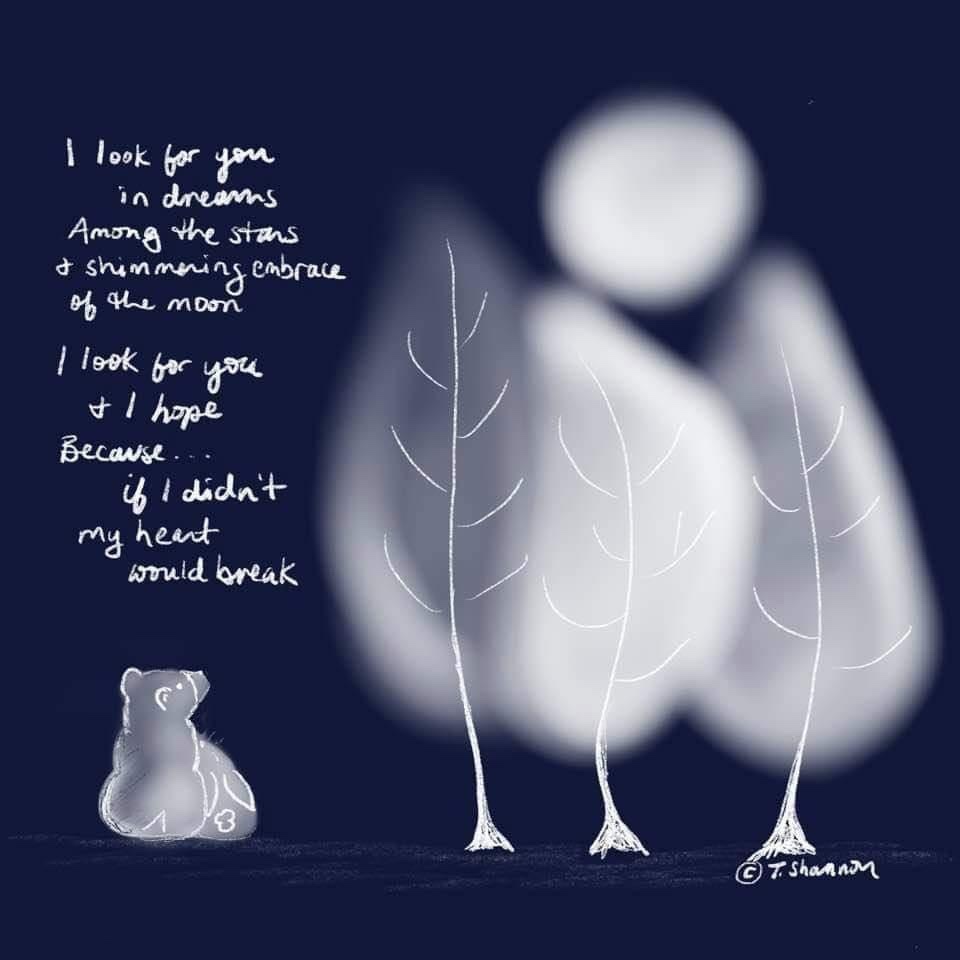
I look for you in dreams

Among the stars

& shimmering embrace

of the moon

I look for you & I hope

Because…

if I didn’t

my heart

would break

©Tara Shannon, 2021

#rabbitandbear #loss #love #heartbreak #hope #moonandstars #moon #stars

Memories Are Magic

www.facebook.com/538512036161674/posts/4911439732202194/

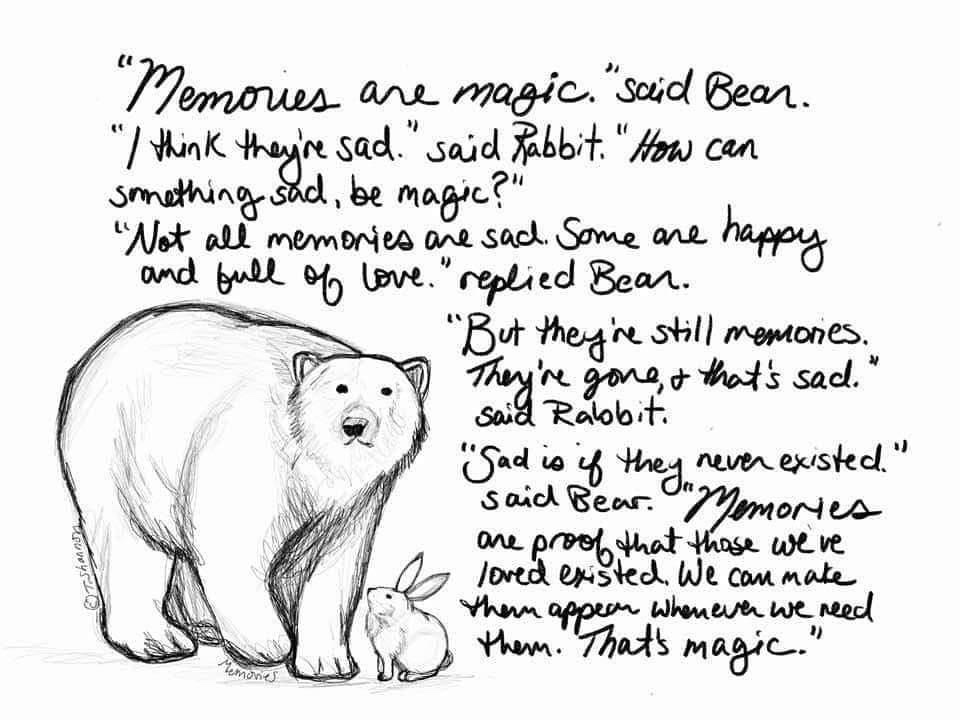
“Memories are magic.” said Bear.

“I think they’re sad.” said Rabbit. “How can something sad, be magic?”

“Not all memories are sad. Some are happy and full of love.” replied Bear.

“But they’re still memories. They’re gone, and that’s sad.” said Rabbit.

“Sad is if they never existed.” said Bear. “Memories are proof that those we’ve loved existed. We can make them appear whenever we need them. That’s magic.”

***

I was honoured to be asked by the American Childhood Cancer Organization @accorg to take part in their silent auction last year. And… I was even more honoured to create this piece for the winner. ❤🐇🐻

A few tears were shed creating it. I hope they love it as much as I do.

#original #rabbitandbear #memories #magic #grief #loss

©Tara Shannon, 2020 Memories

Healing in Community

I am so grateful that I discovered a few very helpful groups of people that support each other as they grieve the deaths of their loved ones. These people are not there to fix or make better. They walk the journey with each other; they sit on the bench with each other. Grief is hard but it is a blessing when you find a community of people to walk on the path with you.

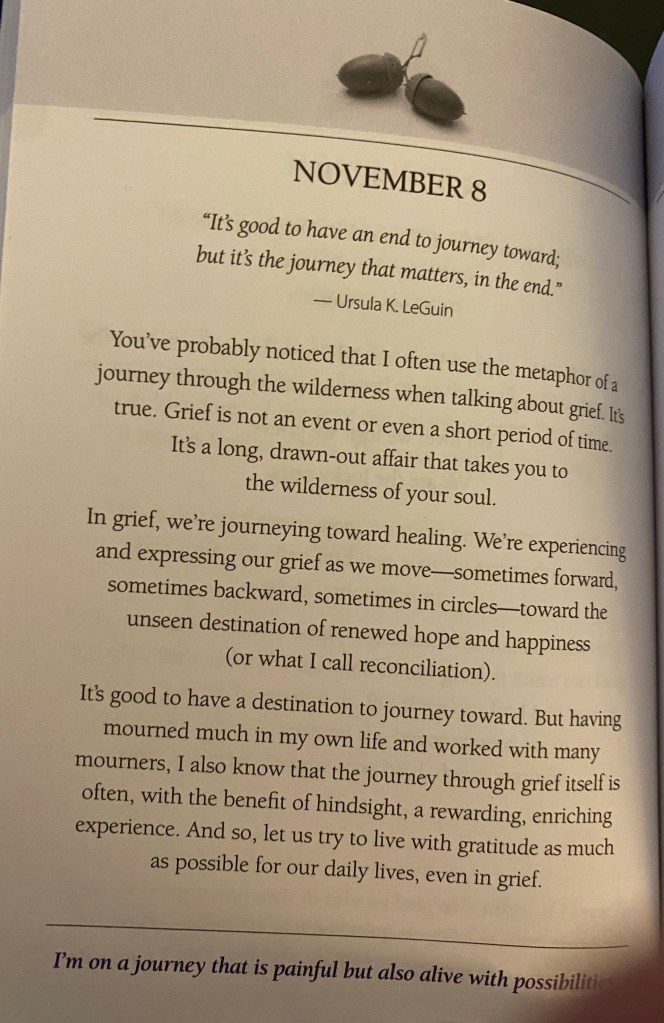
The journey toward healing

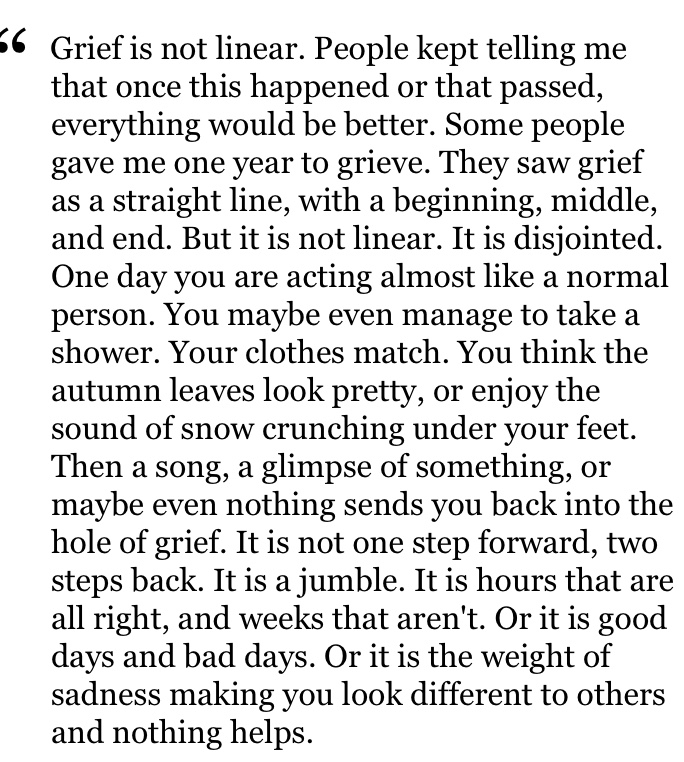
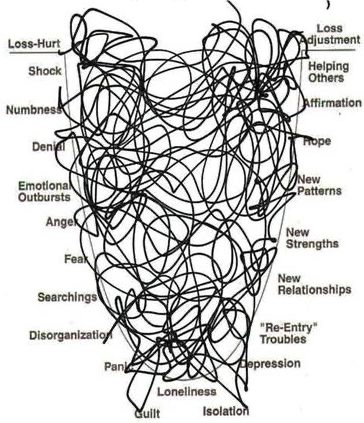
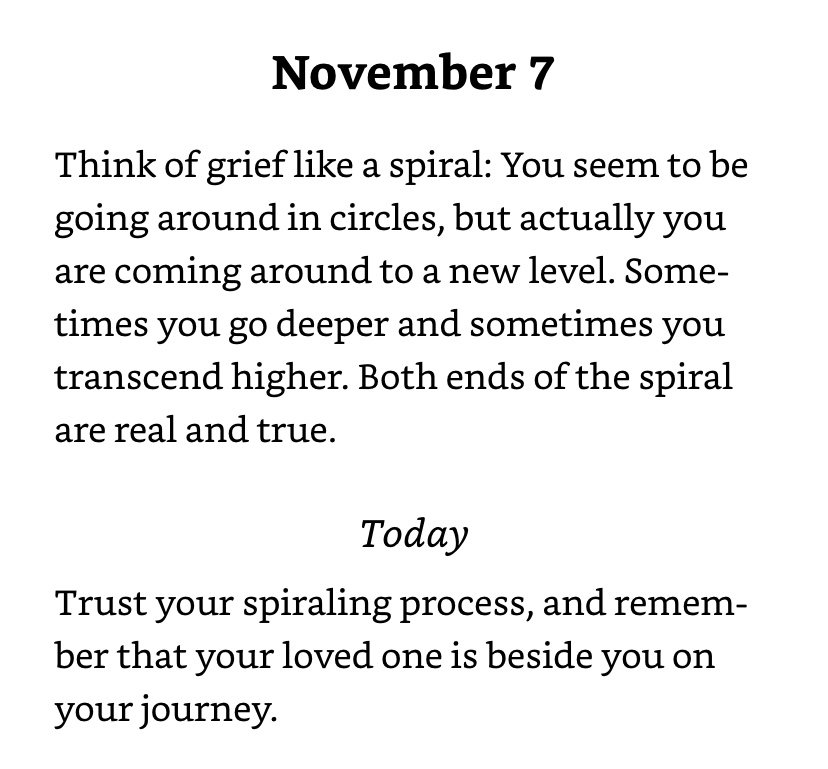
It is human nature to look for and expect an ending to most situations. In grief lots of people talk about the stages of grief – developed by Elizabeth Kubler Ross. Many misguided people try to push themselves and/or others into steps in a linear fashion. Later in her life, Kubler Ross stated that people misinterpreted these steps. There is no neat, linear path to healing. If you believe that you will move through these steps, fully leaving the previous one behind as you approach the new step, I believe you will be in for a rude awakening. Grief is messy and not linear for most of us. The one thing about grief that have come to understand and believe is that it is necessary for healing. I believe we need to stop trying to create a “one size fits all” model for how people should grieve. I am sharing a few readings from the past couple of days below that prompted me to write this entry.

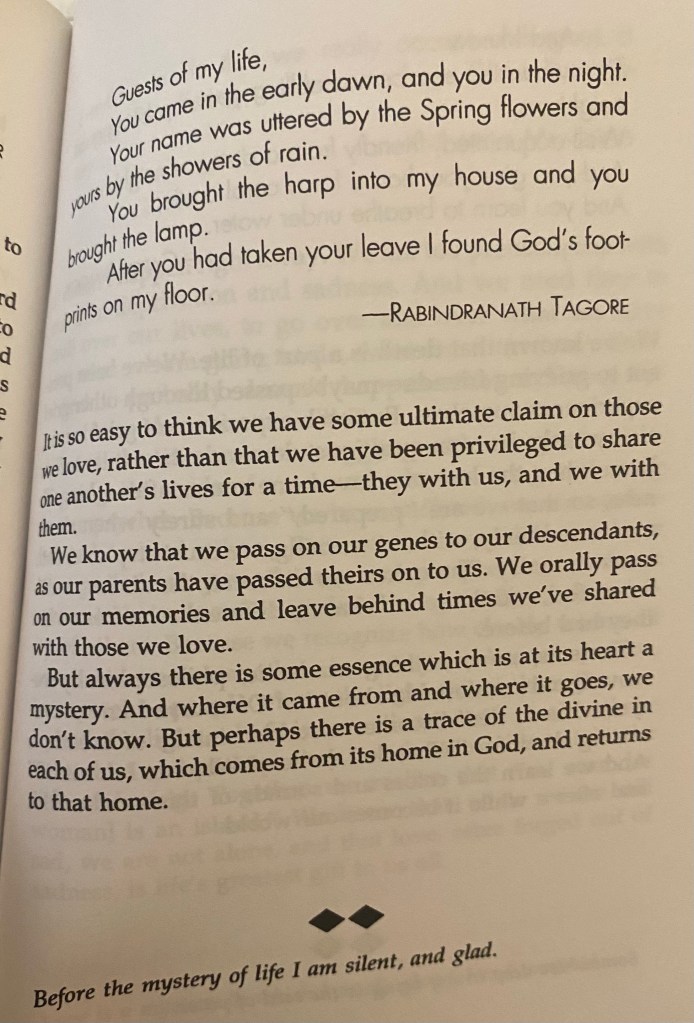
What grief looks and feels like for many people:

How To Grieve

www.facebook.com/862760275/posts/10165342422830276/

when somebody else tries

to tell you how you should grieve

smile and forgive them

through your watering eyes

and then imagine

how lonely it must be

to be the person who

audits the tears

of other people

the well-intended

will tell you how

long you should miss

your beloved

but

you take your time

grief is a hedge maze

and being lost inside of it

is more than okay

don’t race through

your heartache

because you might

just miss a miracle

or two

in the teardrops rolling

down your face

don’t grieve quickly

just to make somebody

else feel better

if you need to,

let your grief

become a coral reef

let the algae of your hurt

slowly form over the years

into the softest violet hue of heaven

it can take two lifetimes to recover

when our beloved becomes

an empty chair

it’s okay

take as much time

as you need

your healing is your healing

and the scars of absence

will itch longer than you can imagine

but that is because you

risked to love so deeply

and that is far better than

the alternative

I am proud of you

and the courage it

takes for you to grieve

so fearlessly

don’t listen to those

who want you to go back

to normal

normal will never exist again

for those of us who have

lost a part of our heart

if the moon broke in half

would it feel normal?

to hell with normal

normal was their scent on your collar

normal was their voice resting in your ear

normal was their touch on your skin

you have a new normal

it’s looking at the shape of clouds

for messages from the great beyond

that your beloved is fine

you have a new normal

it’s building a cabin in

the woods of your memory

where you and your beloved

can meet for lunch

you have a new normal

it’s crying and laughing

at the same time

whenever their favorite

song plays on the radio

grief isn’t the enemy

of life

numbness is

don’t become numb to your suffering

welcome it in

and let it wrap you

up like a blanket

whenever it shows up

at your door

it’s okay

I swear

it’s okay

your beloved misses you just

as much as you miss them

and someday

you two will

get all tangled up

together again

someday

you two will

push each on a

swing again under

a shower of falling blooms

and someday

you two will ride

comets together

on the edge of everything

and someday

you two will giggle

at all of the people

who tried to tell you

how to grieve

~ john roedel (johnroedel.com)

(Photo: Daniel Radford)

Say Yes More Than You Say No

www.facebook.com/100046988926897/posts/418295939746700/

THIS. IS. NOT. EASY.

There is nothing

nothing

easy about this thing called grief.

Nothing.

But I ask you to please

please

please

say yes

more than you say no.

Say yes to you.

To possibility.

To hope.

To love.

To life.

To healing.

Please choose the light

more often than you choose the darkness.

Not that there aren’t gifts in the darkness.

But it’s often so much easier to find them

the gifts

in the light.

Do all you can to stay in the light.

Please remember that the person you love

so

so

so dearly

lived.

Don’t forget that.

He lived.

She had a life.

Here with you.

And your relationship continues.

Always.

ALWAYS.

Always.

Try not to be so overwhelmed

and paralyzed

and pissed off

that he died

that you spend most of your time

focusing on her death.

Say yes as often as you can.

Choose light as often as you can.

Remember that he lived as often as you can.

Don’t loose her in the details of her death.

This thing called grief is hard

hard

hard work.

But you are stronger than you think.

You have already walked through fire.

There is a new way to do grief.

Please share so the others will know.

My first book

Permission to Mourn

is available at amazon: https://www.amazon.com/Permission-Mourn-New-Way-Grief/dp/1600475655/ref=cm_cr_arp_d_product_top?ie=UTF8