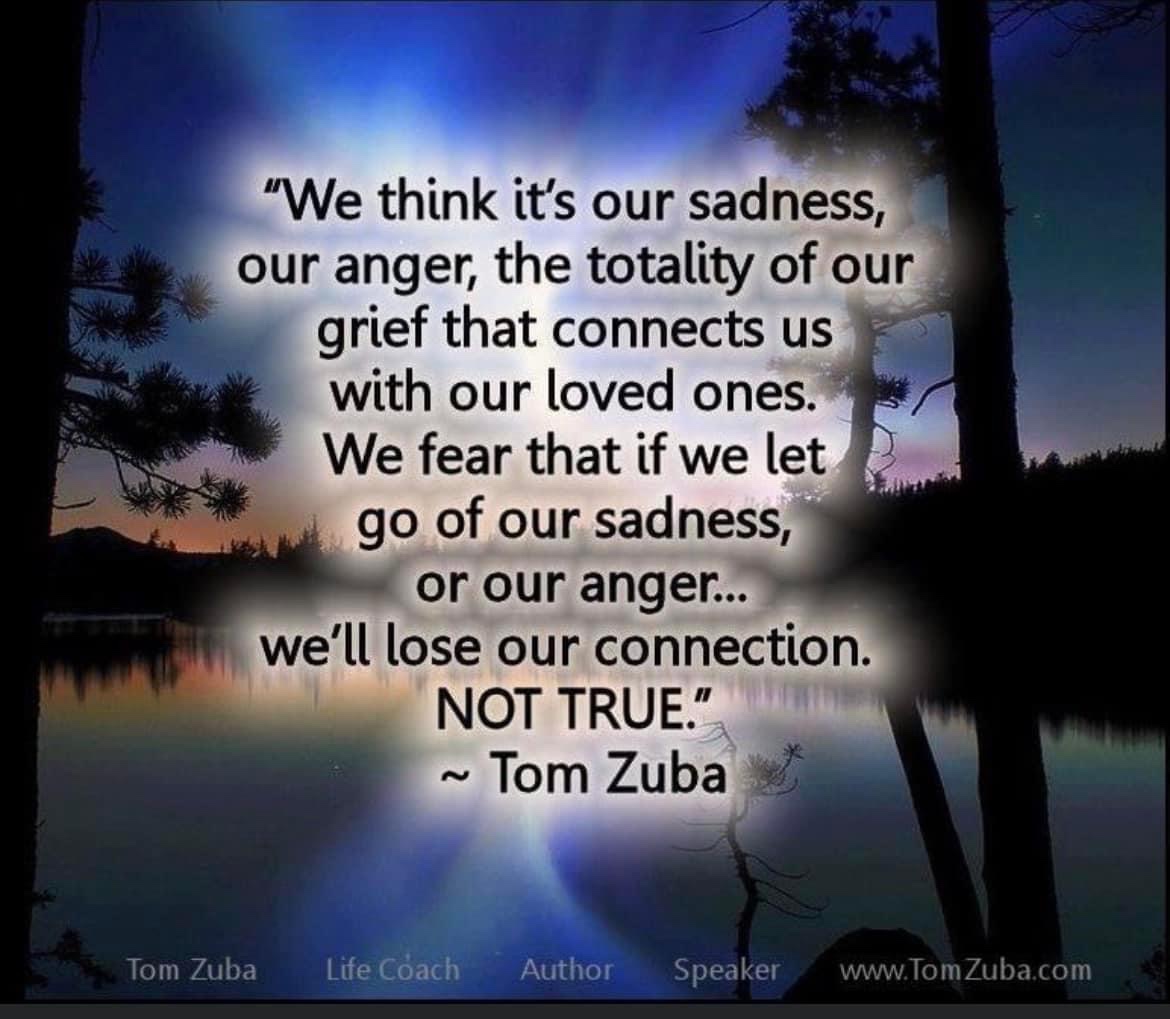
I found this post appropriate as I head into my 3rd new year since Richard’s death:
“When someone who we love dies, the entire landscape of our life changes. We grieve, not only the person, but their place in our lives and in our hopes and dreams. Their absence changes everything about what we see and what the future looks like.
Yet, their love still remains steadily underneath the pain of it all. Their love plays a role in our hopes and dreams and futures. Soft and steady. Persevering. Continuing. Still there. Still there..
And we take that love with us into each new day and each new year in whatever way we can. And we bring them with us. And we know in our hearts that their love plays just as big of a role now as it did before. Because when we love deeply, we love forever. ❤️”
If you’ve lost a spouse…I feel your pain. The road you’re traveling is full of potholes and it’s long.
The first year for me was all about navigating life alone. The second year was trying to learn how to redefine and recreate a purposeful and meaningful life for myself.
It was about living single.
I was a part of a couple for 20 years. I loved being married. I loved being a husband. I loved all the great and small things about being a ‘team’. Then, all of a sudden, it was down to me, myself, and I.
I felt cheated that we weren’t given the chance to grow old together. We were happy…and that didn’t seem fair…not by a long shot. I wanted more time….but that isn’t the life that was given to me.
So I had to figure out how to be happy again…on my own.
I had to learn all about living single. I had to learn new social skills. I had to learn how to fit in. I had to learn how to go out without being afraid. I had to find a purpose and a reason to live.
That all takes a lot of work. It’s scary trying to figure out a new direction. It’s hard to move forward alone. But I had to…because I was given no other choice.
Here’s the thing….I eventually got tired of trying to make sense of the senseless.
So I started working on new things…like new dreams…and I gave myself space and grace if some things worked out and some things didn’t. It was a long road…with lots of potholes…but I just kept going.
Grief is work. It’s ongoing. It doesn’t end at the one year mark, and not the second or third, because grief is a reaction to loss….and it’s personal.
I’ve learned there’s no such thing as closure with the loss of someone you love. One thing I know for certain as I continue to move forward with my life….is that I’ll always miss what I lost.
Grief isn’t about moving on…it’s about moving forward…one small step at a time…and grief isn’t only about mourning your loss…but getting to know yourself as a different person.
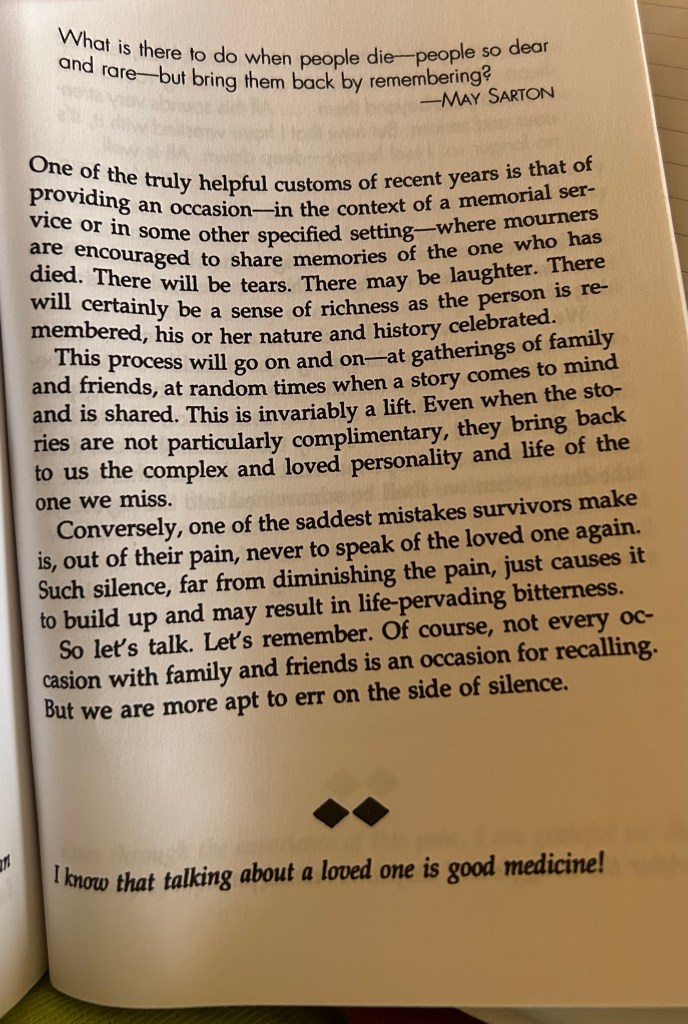
Although Richard died over two years ago, he is still a very important person in my life. I still want to talk about him, laugh at things he said or did, share memories, etc. When a great memory comes up on Facebook, I occasionally want to share. When I do this, it is almost inevitable that people respond with sympathy or as if they feel sorry for me. I’m looking for neither! I’m sharing because it makes me happy! I want to help people understand this, but I’m not sure I can or if it is even worth it!
This is a real struggle for me and one that I’m trying to figure out.
Feel free to comment if you are dealing with this as well. How do we teach people that we are not looking for sympathy or to be pitied?
When I was at one of my lowest points in life, I couldn’t get out of bed on some days. I had no energy or motivation and was barely getting by.
Even therapy seemed like too much effort. I had been going every week, and on one particular day, I didn’t have much to “bring” to the session. My therapist asked how my week was going, and I really had nothing to say.
“What are you struggling with?” he asked.
I gestured around me and said, “I dunno, man. Life.”
Not satisfied with my answer, he said, “No, what exactly are you worried about right now? What feels overwhelming? When you go home today, what issue will be staring at you?”
I wanted to give him an answer that was substantial, something that seemed worthy of struggle. But instead, I told him the truth.
“Honestly?” I said. “The dishes. It’s stupid, I know, but the more I look at them, the more I can’t do them because I’ll have to scrub them before I put them in the dishwasher, because my dishwasher sucks, and I just can’t stand to scrub the dishes.”
I felt like an idiot just saying it out loud. What kind of grown-ass adult is undone by a stack of dishes? There are people out there with actual problems, and I’m whining to my therapist about a basic household chore?
And yet my therapist nodded in understanding. And then he shared his advice:
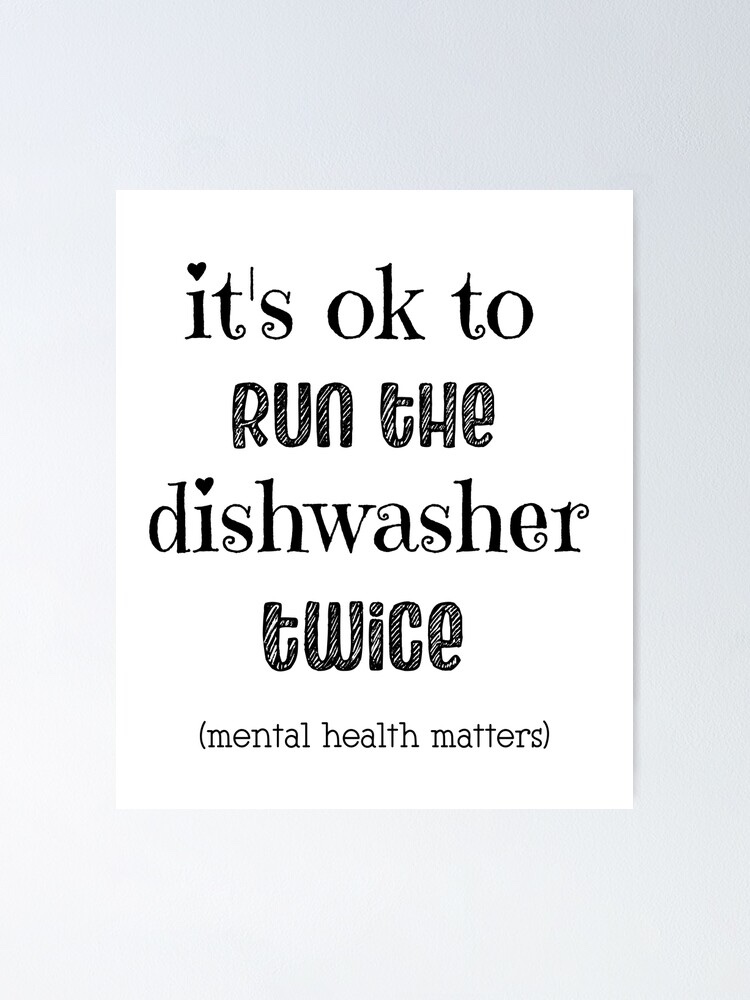
“Run the dishwasher twice.”
Huh? I began to tell him you’re not supposed to do that, but he immediately stopped me.
“Why the hell aren’t you supposed to? If you don’t want to scrub the dishes and your dishwasher sucks, run it twice. Run it three times, who cares?! Rules do not exist.”
His words blew my mind in a way that I don’t think I can properly express.
That day, I went home and tossed my smelly dishes haphazardly into the dishwasher and ran it three times. I felt like I had conquered a dragon.
The next day, I took a shower lying down.
A few days later, I folded my laundry and put my clothes wherever the fuck they fit. As I reveled in my newfound freedom, I stopped seeing each day as a series of arbitrary rules to follow. Eventually, I felt free enough to set goals again, on my own terms.
Now that I’m in a much healthier place, I rinse off my dishes and place them in the dishwasher properly. I shower standing up. I sort my laundry.
But at a time when living was a struggle instead of a blessing, I learned an incredibly important lesson:
In order to heal you must give yourself permission to mourn. You must create a plan that is concrete and doable.
Some suggestions: 1. Journal-journaling has been extremely helpful in my grief journey. At first I journaled every day (sometimes multiple times in a day). It is good to get all of the feelings, emotions, fear, etc. out! 2. Spend time alone in silence- This one is harder for me. I do love my alone time, but I have found it more difficult to be in silence since Richard’s death. 3. Commit to crying – not only did I cry a lot in the beginning, I sobbed! I am so thankful that I gave myself permission to do this and not worry about “appearing strong”! 4. Start a gratitude journal- this can be part of the journal in #1. On days that I don’t journal, I state my gratitude out loud (usually when I’m driving). It changes the course of the day to have a grateful heart. 5. Rebuild your broken body – this is one that I’m working on. I’m trying to recover my physical health. While I’m not unhealthy, I know I need to be more intentional with exercise, drinking water, and making healthy food choices. This has been a tough one for me. But I’m going to keep trying.
Begin where you are today.
Add suggestions that have been helpful to you in your grief journey in the comments.







 Gina’s thoughts on life, death, and in between